Laser Drying: Fast and Localized Evaporation for Industrial Processes
Laser drying is a controlled heating method that rapidly evaporates moisture or solvent only from the targeted area — without heating the entire part or carrier surface.
Let's Evaluate Your Application →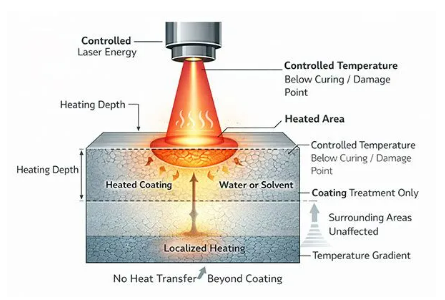
What Is Laser Drying?
A contactless heat treatment method — the laser delivers controlled energy to evaporate water or solvent from films, coatings, inks or processed surfaces. It offers fast response time, precise energy control, and selective drying without affecting the surrounding area.
- Contactless, localized heating
- Precisely controlled, fast evaporation
- Minimal thermal impact on surrounding areas
Why Laser Instead of Conventional Oven/Hot Air?
E-O conversion efficiency — significantly superior to infrared lamps (~35%) and convection ovens (<20%).
Reduction in line length — while traditional ovens can extend up to 80-100 meters, laser systems are far more compact.
Time to reduce moisture below 1% (in battery electrode drying example) — instant on/off, no preheating wait time.
How Does Laser Drying Work?
The laser beam heats the material's surface layer to a temperature sufficient to evaporate moisture or solvent. Heat input is precisely controlled to prevent material damage, deformation or unwanted chemical changes.
- Fast heating and fast response
- Shallow thermal penetration — only the surface layer is affected
- Programmable power, speed and spot size
Typical Laser Drying Applications
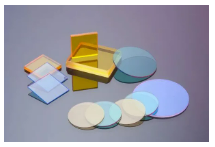 Thin Film & Coating
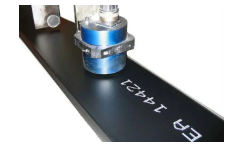 Printed Ink
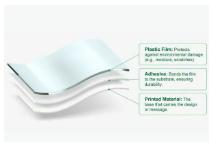 Bonding Preparation
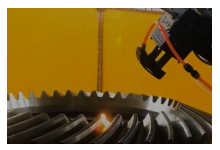 Pre-Treatment
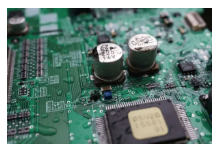 Moisture Removal (PCB)
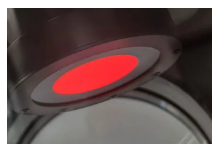 Assembled Part Drying
Which Industries Use It?
Who Chooses This?
Teams responsible for production/process operations in the sectors above typically turn to laser drying for the following needs:
Process/Production Engineers
Teams seeking an alternative when the conventional oven/hot air line is a bottleneck, or line length/energy consumption is excessive.
Quality & R&D Teams
Teams requiring a precise, repeatable drying/curing process that doesn't damage material, especially those working with sensitive components (PCB, thin film, coating).
Line Automation / Integration Managers
Teams wanting to integrate the drying step inline into the existing production line, speeding up the process without a separate oven station.
Why Diode Laser for Drying Applications?
Homogeneous Energy Distribution
A flat-top beam profile provides controlled heating without overheating or hot-spot formation.
Precise Thermal Control
Adjustable output power enables drying without damaging or overheating the material.
Flexible Integration
Easily integrated into coating lines, printing systems and automation cells.
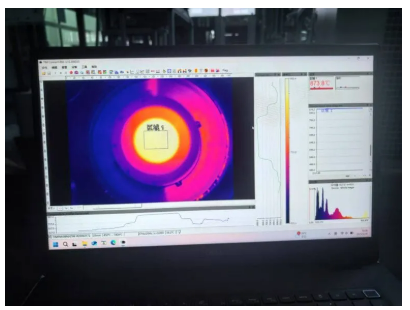
Thermal camera measurement: the controlled heating zone and temperature distribution are monitored in real time.
When Should Laser Drying Be Chosen?
If one or more of the following apply to you, laser drying is technically worth evaluating.
- When fast, localized drying is required
- When a conventional oven or hot air process is too slow
- When surrounding materials need to stay cool
- When drying needs to be integrated inline into the production line
Recommended Systems for This Application
VIV-6000W / VIV-10000W
Compact diode laser systems in the 6,000W – 10,000W output range, optimized for drying and evaporation applications. Full technical specifications are available in our product catalog.
Go to Product Catalog →Why Kuant Laser · Vivlaser
Let's Evaluate Your Drying Needs Together
Share your material type, solvent/moisture level and process requirements — our engineers will assess feasibility and recommend the right laser drying solution for you.
Contact Us